Resistance bands offer a versatile and accessible fitness solution, mirroring natural muscle curves and providing adjustable resistance for all levels.
They’re ideal for home workouts, offering assistance or increased challenge, ranging from 1 to 300lbs of resistance, as highlighted by fitness enthusiasts.
What are Resistance Bands?
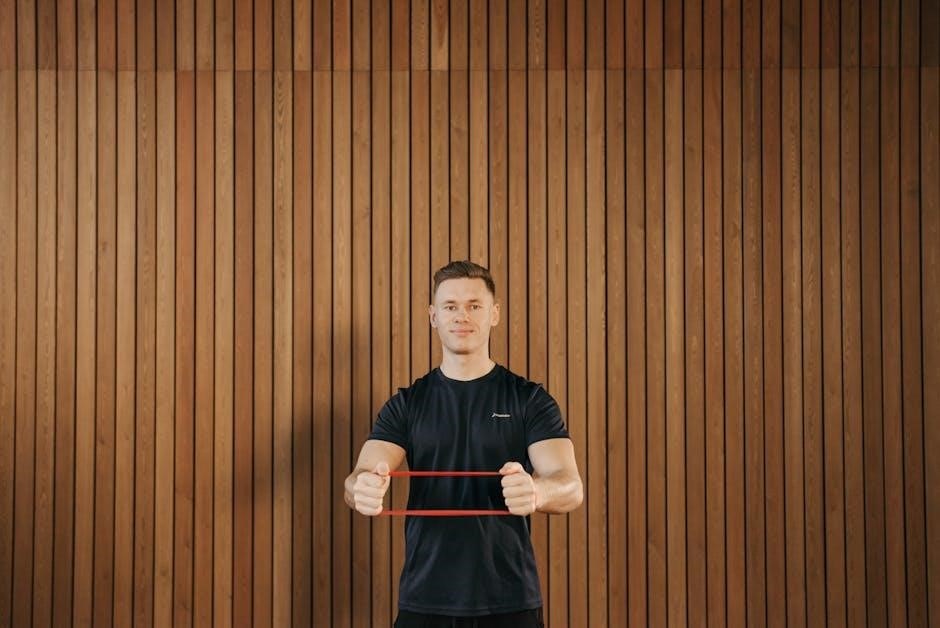
Resistance bands are elastic exercise tools used to build strength, improve flexibility, and enhance rehabilitation. Unlike traditional weights, they provide variable resistance – meaning the resistance increases as the band is stretched. This closely mimics the natural strength curve of many exercises, making them incredibly effective.
These bands come in various forms, including loop bands and those with handles, offering a wide range of exercise possibilities. They are incredibly portable and affordable, making them a fantastic option for home workouts or travel. As noted by fitness communities, resistance isn’t limited to heavy weights; bands can provide anything from 1lb to 300lbs of resistance!
They are a versatile tool, suitable for all fitness levels, and can be used for assistance or increased challenge.
Benefits of Using Resistance Bands
Resistance bands offer a multitude of benefits for fitness enthusiasts of all levels. Their unique ability to mimic the strength curve of muscles during exercise leads to more effective workouts. They’re incredibly versatile, functioning as both assistance tools – aiding in exercises like push-ups – and challenge enhancers, increasing difficulty for more advanced users.
Portability and affordability are key advantages, enabling effective workouts anywhere, anytime. Bands are also excellent for rehabilitation, providing controlled resistance for injury recovery. The wide range of resistance levels, from 1lb to 300lbs, ensures suitability for beginners to advanced athletes.
Many have found a renewed love for home fitness with bands, especially post-pandemic.
Types of Resistance Bands
Resistance bands come in various forms, each suited to different training styles and preferences. Loop bands, often continuous loops, are incredibly versatile for lower body exercises like squats and lateral walks, offering resistance from 1 to 300lbs.
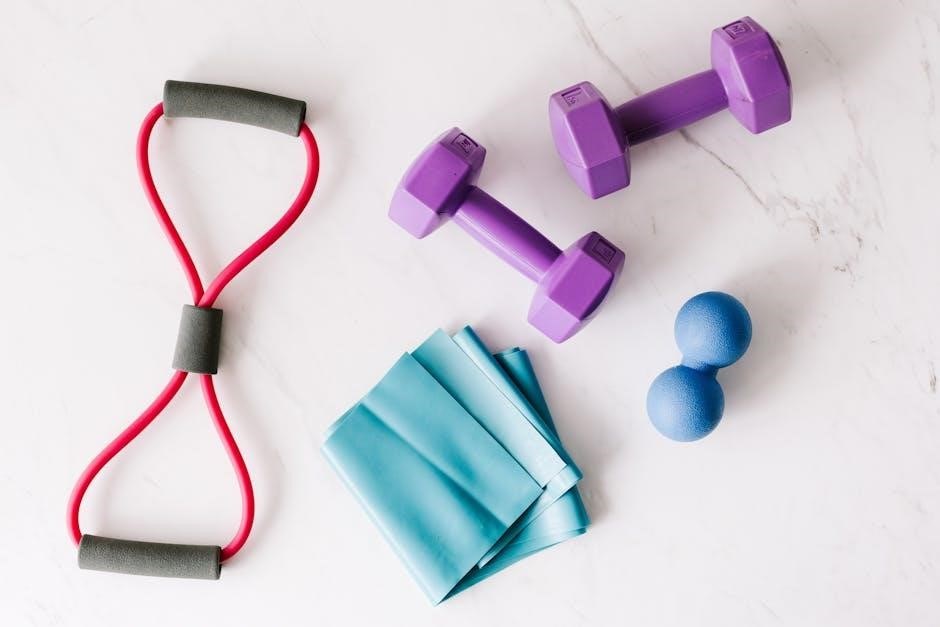
TheraBands, typically flat and wider, are frequently used in rehabilitation and physical therapy due to their controlled resistance. Tube bands with handles provide a comfortable grip for upper body exercises like bicep curls and tricep extensions.
Figure-8 bands offer unique movement patterns and are excellent for rotational exercises. When selecting bands, prioritize quality and safety, especially those with protective nylon sleeves, to prevent snapping and potential injury.
Full Body Resistance Band Workout Routine
This routine incorporates warm-up, lower body, upper body, and core exercises utilizing resistance bands for a comprehensive and effective full-body workout session.
Warm-up Exercises (5-10 minutes)
Begin your resistance band workout with a dynamic warm-up to prepare your muscles and joints for exercise. This crucial step enhances performance and minimizes injury risk.
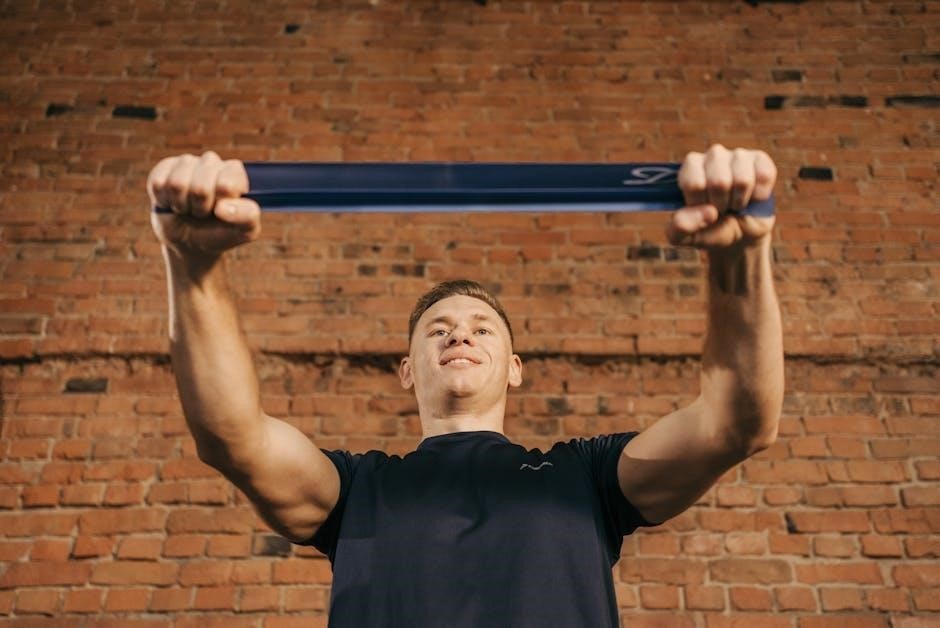
Band Pull-Aparts are excellent for activating the rear deltoids and upper back. Secure a band with arms extended, then pull it apart, squeezing your shoulder blades together.
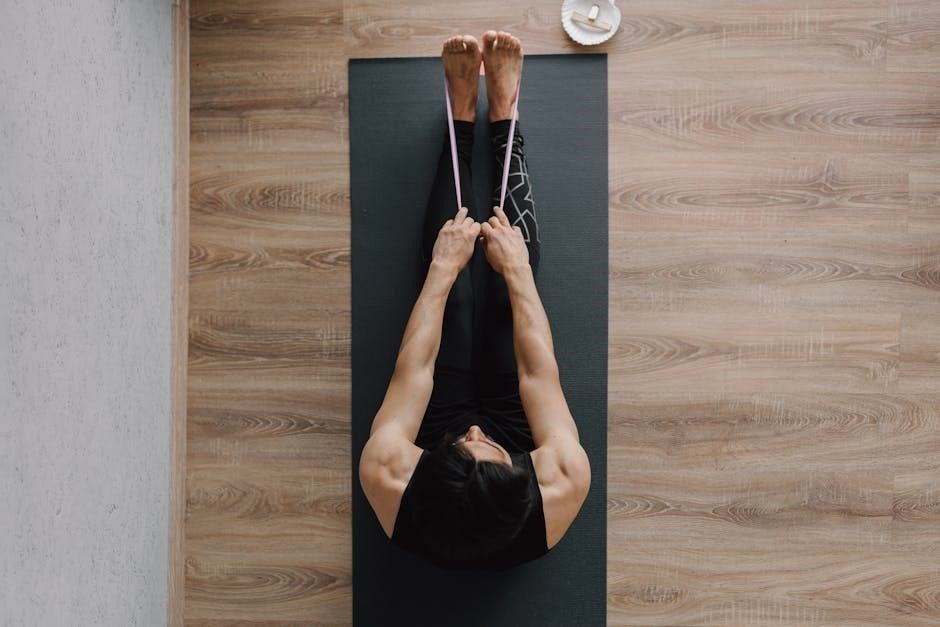
Arm Circles with Band improve shoulder mobility. Anchor the band under your feet, hold the ends, and perform small, controlled circles forward and backward.
These warm-up exercises, lasting 5-10 minutes, increase blood flow and prepare your body for the more intense exercises to follow, ensuring a safe and effective workout.
Band Pull-Aparts
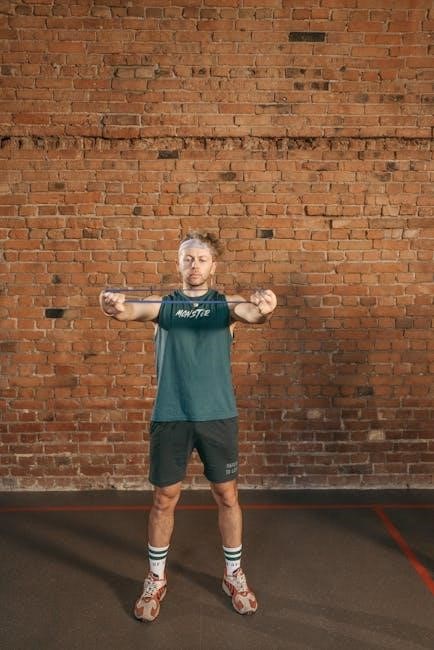
Band Pull-Aparts are a foundational exercise for warming up the upper back and shoulders, crucial before a full resistance band routine. Begin by holding a resistance band with both hands, arms extended straight out in front of you at shoulder height.
Maintain a slight bend in your elbows throughout the movement. Slowly pull the band apart, focusing on squeezing your shoulder blades together.
Concentrate on engaging the rear deltoids and rhomboids. Hold the stretched position briefly, then slowly return to the starting position, controlling the resistance.
Perform 15-20 repetitions for a thorough warm-up, preparing your muscles for more demanding exercises.
Arm Circles with Band
Arm Circles with Band effectively warm up the shoulder muscles and improve mobility, preparing them for more intense upper body exercises within your resistance band workout. Secure a resistance band under your feet, holding the ends with your hands, palms facing down.
Keep your elbows slightly bent and initiate small, controlled circles forward.
Focus on maintaining constant tension on the band throughout the movement. Perform 20-30 repetitions in a forward direction, then reverse the motion and perform another 20-30 repetitions in a backward direction.
This dynamic movement enhances blood flow and prepares the shoulder joint for a wider range of motion.
Lower Body Exercises
Lower Body Exercises utilizing resistance bands are fantastic for sculpting and strengthening your legs and glutes, offering a versatile alternative to traditional weights. These exercises can be easily incorporated into a home workout routine, mirroring the benefits of gym equipment.
We’ll focus on four key movements: Resistance Band Squats, Glute Bridges with Band, Lateral Walks with Band, and Standing Calf Raises with Band.
These exercises target major muscle groups, enhancing lower body strength and stability. Remember to maintain proper form and control throughout each repetition to maximize effectiveness and prevent injury. Adjust band resistance to match your fitness level.
Resistance Band Squats
Resistance Band Squats elevate the traditional squat by adding continuous tension throughout the movement, maximizing muscle engagement. Place the band around your thighs, just above your knees, ensuring a snug but comfortable fit. Stand with feet shoulder-width apart, toes slightly outward.
Initiate the squat by pushing your hips back and bending your knees, keeping your back straight and core engaged. Descend as if sitting into a chair, maintaining tension on the band. Drive through your heels to return to the starting position, squeezing your glutes at the top.
Complete 12-15 repetitions for three sets, adjusting band resistance as needed.
Glute Bridges with Band
Glute Bridges with Band effectively target the glutes and hamstrings, enhancing lower body strength and stability. Position the resistance band around your thighs, slightly above your knees. Lie on your back with knees bent and feet flat on the floor, hip-width apart.
Engage your core and squeeze your glutes to lift your hips off the floor, creating a straight line from your shoulders to your knees. Maintain tension on the band throughout the movement, resisting the outward pull. Hold briefly at the top, then slowly lower your hips back to the starting position.
Perform 12-15 repetitions for three sets, adjusting band resistance for optimal challenge.
Lateral Walks with Band
Lateral Walks with Band are excellent for activating the gluteus medius, crucial for hip stability and preventing knee pain. Place a resistance band around your ankles, or just above your knees for increased difficulty. Stand with your feet hip-width apart, knees slightly bent in a quarter-squat position.
Maintain the squat position and take small, controlled steps to the side, keeping tension on the band throughout the exercise. Avoid letting your knees cave inward; focus on pushing your knees outward against the band’s resistance.
Take 10-12 steps in one direction, then repeat in the opposite direction. Complete 3 sets of lateral walks, adjusting band resistance as needed.
Standing Calf Raises with Band
Standing Calf Raises with Band effectively target the gastrocnemius and soleus muscles in your calves, enhancing lower leg strength and definition. Securely position a resistance band under your feet, holding the ends in your hands. Stand with your feet hip-width apart, maintaining a slight bend in your knees.
Slowly rise up onto the balls of your feet, contracting your calf muscles and resisting the band’s pull. Focus on a full range of motion, maximizing the stretch at the bottom and the squeeze at the top;
Lower back down with control, maintaining tension on the band. Perform 15-20 repetitions for 3 sets, adjusting band resistance for optimal challenge.
Upper Body Exercises
Upper body resistance band exercises provide a fantastic way to build strength and tone muscles without needing heavy weights. These exercises are incredibly versatile and can be modified to suit various fitness levels.
Focus on controlled movements and maintaining proper form throughout each repetition. Key exercises include Bicep Curls, targeting the biceps for arm definition, and Tricep Extensions, working the triceps for a sculpted back of the arm.
Chest Presses effectively engage the pectoral muscles, while Rows strengthen the back and improve posture. Aim for 3 sets of 12-15 repetitions for each exercise, adjusting band resistance as needed.
Bicep Curls with Band
Bicep Curls with a resistance band are a highly effective exercise for isolating and strengthening the biceps muscles. Stand on the middle of the band with feet shoulder-width apart, holding the handles with palms facing forward.
Keep your elbows close to your sides and curl the band upwards, squeezing your biceps at the top of the movement. Slowly lower the band back to the starting position, maintaining control throughout.
Perform 3 sets of 12-15 repetitions, focusing on a full range of motion. Adjust the band’s resistance by changing your foot placement or using a different band to increase or decrease the challenge.
Tricep Extensions with Band
Tricep Extensions using a resistance band effectively target the back of your upper arms, building strength and definition. Secure the band overhead, perhaps looped around a sturdy door anchor or fixed bar.
Grip the band with one hand, keeping your elbow close to your head. Extend your forearm downwards, straightening your arm and focusing on contracting your triceps. Slowly return to the starting position, resisting the band’s pull.
Complete 3 sets of 12-15 repetitions per arm. Vary the band’s resistance by adjusting your grip or selecting a band with different tension levels for a progressive challenge.
Chest Press with Band
The Chest Press with a resistance band is a fantastic way to work your pectoral muscles at home, mimicking a dumbbell chest press. Secure the band behind your back, looping it under your armpits.

Grip the band ends with your hands, palms facing forward. Step forward slightly to create tension. Push your arms straight out in front of you, squeezing your chest muscles as you extend.
Slowly return to the starting position, controlling the band’s resistance. Perform 3 sets of 12-15 repetitions. Adjust band tension or use multiple bands for increased difficulty, enhancing your upper body strength.
Rows with Band
Resistance band rows effectively target your back muscles, promoting strength and posture. Sit on the floor with your legs extended and loop the band around your feet. Maintain a straight back and hold the band ends with your palms facing each other.
Pull the band towards your torso, squeezing your shoulder blades together. Keep your elbows close to your body throughout the movement. Slowly return to the starting position, controlling the band’s resistance.
Complete 3 sets of 12-15 repetitions. For a greater challenge, adjust the band’s resistance or shorten the length of the band, intensifying the workout for a stronger back.
Core Exercises
Strengthening your core with resistance bands enhances stability and overall fitness. Incorporate exercises like Russian twists and wood chops to engage your abdominal and oblique muscles effectively. For Russian twists, sit with knees bent, lean back slightly, and twist side to side while holding the band.
Wood chops involve mimicking a chopping motion with the band, rotating your torso and engaging your core. Additionally, perform planks with band resistance around your wrists or ankles for an added challenge.
Aim for 3 sets of 15-20 repetitions for each exercise, focusing on controlled movements and proper form to maximize core engagement.
Russian Twists with Band
Russian twists with a resistance band are a fantastic core exercise, targeting your obliques and abdominal muscles. Begin by sitting on the floor with your knees bent and feet slightly elevated. Secure the resistance band around your feet, holding the ends with both hands.
Lean back slightly, maintaining a straight back, and twist your torso from side to side, bringing the band towards each side of your body. Focus on controlled movements and engaging your core throughout the exercise.
Complete 3 sets of 15-20 repetitions, ensuring consistent tension on the band to maximize the workout’s effectiveness.
Wood Chops with Band
Wood chops with a resistance band effectively work your core, obliques, and shoulders, mimicking a chopping motion. Anchor the band securely at a higher point, like a sturdy door frame or pole. Grab the band with both hands, starting with arms extended upwards and across your body.
Pull the band diagonally downwards and across your body, as if chopping wood, keeping your core engaged and back straight. Control the movement as you return to the starting position.
Perform 3 sets of 12-15 repetitions on each side, focusing on a smooth, controlled motion to maximize core activation and prevent injury.
Plank with Band Resistance
Plank with band resistance significantly increases the intensity of a traditional plank, challenging your core stability and endurance. Loop a resistance band around your feet and hold the ends in your hands, positioning yourself in a high plank position.
Ensure your body forms a straight line from head to heels, engaging your core, glutes, and shoulders. The band creates outward tension, forcing you to actively resist rotation and maintain proper form.
Hold the plank for 30-60 seconds, completing 3 sets with short rests in between. Focus on controlled breathing and maintaining a stable core throughout the exercise.
Workout Variations & Progression
Progressing with resistance bands involves adjusting band resistance, increasing repetitions and sets, or combining bands for a greater challenge, adapting to your fitness level.
Adjusting Band Resistance
Resistance bands come in varying levels of resistance, often color-coded for easy identification. Starting with a lighter band is crucial, especially for beginners, to master proper form and prevent injury. As you grow stronger, progressively increase the resistance by switching to a heavier band.
This gradual increase ensures continuous challenge and prevents plateaus. Remember, a band providing 1lb of resistance exists, scaling up to 300lbs, offering options for all fitness levels. Don’t hesitate to experiment with different bands for each exercise to target specific muscle groups effectively.
Consider that bands mimic the strength curve, so finding the right resistance is key for optimal results. Always prioritize controlled movements over simply using the heaviest band available.
Increasing Repetitions and Sets
Progressive overload is key to continued fitness gains, and increasing repetitions and sets is a fundamental method. Once an exercise feels manageable with a specific band and number of repetitions (e.g., 12 reps), aim to increase the reps to 15 or 20.
If increasing reps becomes too easy, consider adding an additional set. Start with two sets, then progress to three, and eventually four. This approach builds endurance and strength over time. Remember to maintain proper form throughout each repetition and set.
Listen to your body and rest when needed. Combining increased reps/sets with band resistance adjustments maximizes workout effectiveness, mirroring the benefits found in dedicated resistance band routines.
Combining Bands for Greater Challenge
For advanced users, combining resistance bands offers a significant increase in difficulty and allows for customized resistance levels. This can be achieved by looping multiple bands together, effectively increasing the overall tension.

For example, combining a medium and a heavy band can create a resistance level between the two. This is particularly useful for exercises where a single band doesn’t provide enough challenge throughout the full range of motion.
Ensure bands are securely connected to prevent snapping during exercise. This technique, alongside adjusting repetitions and sets, allows for continuous progression, mirroring the adaptability highlighted in comprehensive resistance band workout guides and PDFs.

Safety Considerations
Prioritize safety by regularly inspecting bands for cracks or tears, anchoring them securely, and avoiding overstretching to prevent snapping and potential injury.
Proper Band Inspection
Before each workout, a thorough inspection of your resistance bands is absolutely crucial for safety. Look closely for any signs of damage, including cracks, tears, or cuts in the material. Even small imperfections can compromise the band’s integrity and lead to snapping during exercise.
Pay particular attention to areas that experience the most stress, such as near the attachment points or where the band is frequently stretched. Discard any bands exhibiting damage immediately; it’s not worth risking injury to save a few dollars.
Remember, FitCord specifically advises against using their workout guides with bands lacking a safety sleeve, emphasizing the potential for injury from snapping. Consistent inspection is a simple yet vital step in ensuring a safe and effective resistance band workout.
Anchoring Bands Securely
When utilizing resistance bands that require anchoring, prioritizing a stable and reliable attachment point is paramount for safety and effectiveness. Avoid using flimsy or unstable objects that could shift or break under tension. Solid, immovable structures like sturdy furniture legs or dedicated anchor points are ideal.
Ensure the anchor point can withstand the maximum resistance level of the band you’re using. Always double-check the security of the anchor before beginning any exercise. If wrapping the band around an object, ensure it’s fully enclosed and won’t slip or roll during the movement.
Proper anchoring minimizes the risk of the band snapping back and causing injury, contributing to a safer and more productive workout experience.
Avoiding Overstretching
Resistance bands, while incredibly versatile, possess a limit to their elasticity. Overstretching significantly increases the risk of band breakage, potentially leading to snap-back injuries. Always inspect bands for any signs of wear and tear – cracks, tears, or discoloration – before each use. Discard damaged bands immediately.
Avoid extending the band beyond its recommended length, typically two to three times its original size. Be mindful of your range of motion and avoid forcing the band into extreme positions.
FitCord specifically advises against using workout guides with bands lacking a safety sleeve, emphasizing the increased risk of injury from snapping.

Finding a Resistance Band Workout PDF
Numerous free PDFs are available online, offering diverse resistance band routines for all fitness levels; ensure the guide suits your band type and safety needs.
Resources for Free PDFs
Locating quality resistance band workout PDFs is surprisingly easy with a wealth of online resources. FitCord provides a free guide specifically designed for their bands, emphasizing safety with their nylon-covered bands – a crucial point, as other brands may pose snapping risks.
A quick online search reveals numerous Pinterest pins linking to downloadable routines, like the one from November 28, 2024, showcasing resistance band exercises. Websites dedicated to fitness and calisthenics often host free content, catering to home workout enthusiasts who, like many during the pandemic, discovered the benefits of band training.
Remember to prioritize PDFs from reputable sources and always check if the routine aligns with the type of resistance bands you own, ensuring a safe and effective workout experience.
What to Look for in a PDF Routine
A comprehensive resistance band workout PDF should prioritize clear exercise instructions with detailed visuals, demonstrating proper form to prevent injury. Look for routines that categorize exercises by muscle group – lower body, upper body, core – allowing for balanced training.
Effective PDFs will specify band resistance levels for each exercise, catering to varying fitness levels, from beginner to advanced. Pay attention to whether the routine includes warm-up and cool-down sections, essential for injury prevention and recovery.
Finally, ensure the PDF emphasizes safety, particularly regarding band inspection and secure anchoring, as highlighted by concerns about band snapping with certain brands.